
Strategy
How to build a creator shortlist around your campaign goal
Creator selection, briefing and measurement are practical decisions you can improve. Four moves that put the shortlist to work for the goal you set.
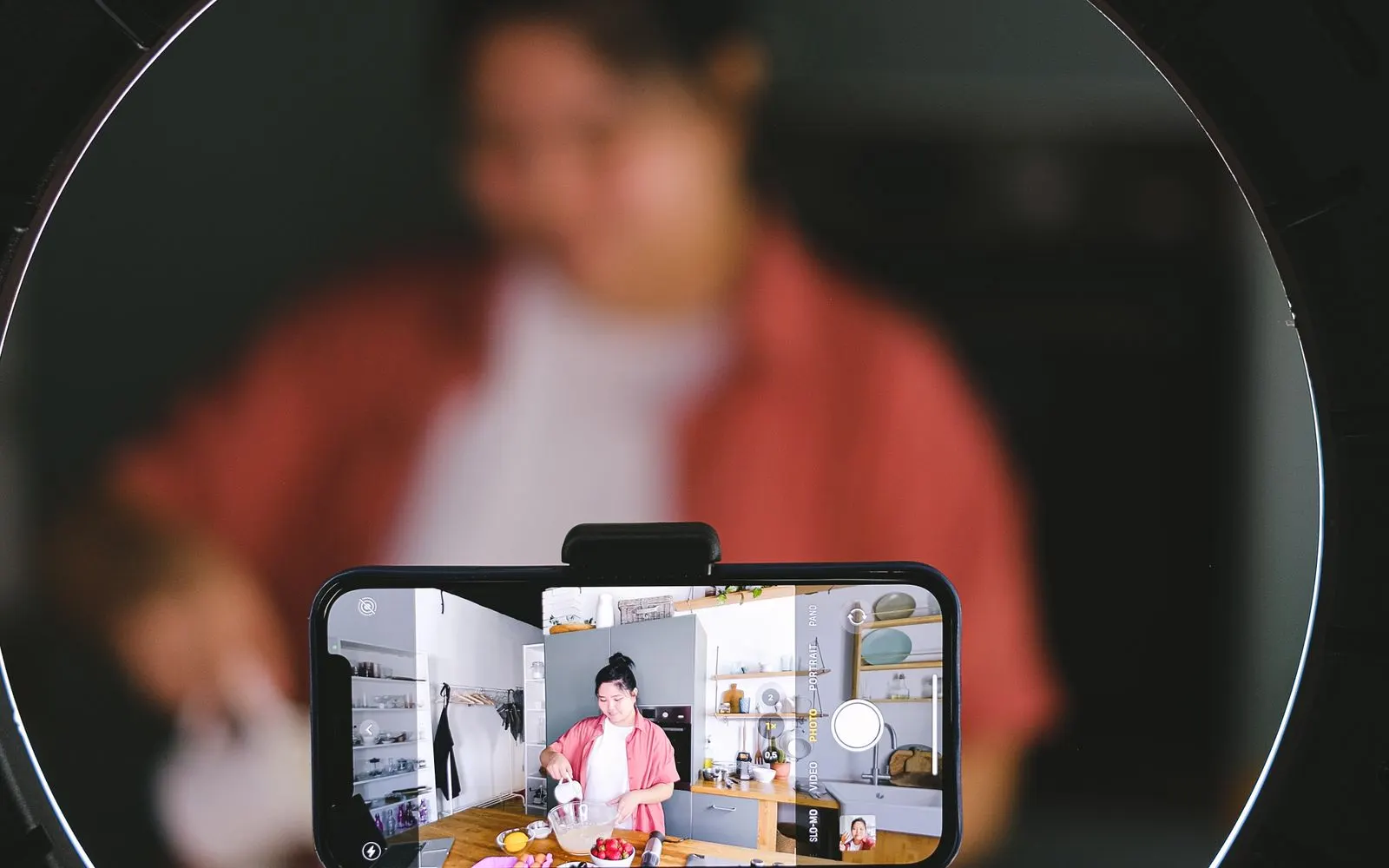
A useful creator shortlist starts with your campaign goal. Audience fit, relevant content, available evidence and confirmed interest help you decide which creators deserve a closer look.
This is how to build a shortlist that gives your campaign the best chance before anyone posts anything.
What the evidence says about the usual filter
In December 2024, Marketing Science published a study by researchers at Harvard and MIT Sloan covering 19,636 influencer video ads, with sales tested on a held out panel of 2,685 matched product and video pairs.
Public engagement did not correlate with sales lift. Likes came in at a rho of minus 0.0075, comments at minus 0.02, shares at minus 0.0074, none of them distinguishable from zero.
19,636
Two things that finding is not. It is not "influencer marketing does not work," and the authors do not say that. Their own constructed measure of product specific engagement does predict lift. Their thesis is that a video can be engaging for reasons that have nothing to do with the product in it, so a raw engagement number tells you the audience liked the video, not that it moved them towards the product. And the data is Douyin, the Chinese version of TikTok, matched to Taobao sales from around 2019, observational rather than experimental. Anyone quoting it as a clean verdict on TikTok in 2026 is overreaching.
What it does support, at a scale nothing else in this literature matches, is a practical point: engagement rate is a fine measure of a creator's relationship with their audience and a poor proxy for whether that audience will buy your product. Use it for what it measures.
What the wider evidence supports
Two meta-analyses published in the Journal of the Academy of Marketing Science in 2025 are the best synthesis available. One covers 71 papers, 135 experimental studies and 571 effect sizes. The other covers 1,531 effect sizes from 251 articles and 2,009,314 individuals across 27 countries.
The effects are real, statistically significant and consistent. Influencer exposure correlates at r equals 0.14 with engagement and r equals 0.11 with purchase intention. Creator content beats brand owned posts on both. Against traditional celebrities it wins on engagement and ties on purchase intention.
These are experimental effect sizes on self reported outcomes, so they are not financial returns. What they settle is the shape of the thing. Creator selection, briefing and measurement are practical decisions you can improve when planning a campaign. Those are the creators you pick, how you brief them, and how you measure.
There is one moderator worth having. Smaller and mid sized creators drive more engagement, larger creators drive more purchase intention. The underlying contrast is a binary large versus small and medium split, so it does not license claims about specific follower tiers, but it is a solid reason to match creator size to your objective rather than to a rule of thumb.
Creator selection, briefing and measurement are practical decisions you can improve when planning a campaign.
Build the shortlist around the goal
Put the evidence to work in four moves.
- Start from the campaign goal, and let it choose the creator size. Purchase intention and conversion point you towards larger creators; community response, comments and content you can reuse point you towards smaller ones.
- Judge fit on content, not on a column. Watch the creator's normal posts and their prior sponsored work. Does the product belong in that feed? Would the audience recognise it as a natural recommendation? That is the product specific engagement the Harvard and MIT study found does predict lift.
- Ask for the audience figures that matter to you, evidenced. Audience location, age split and the metrics for the format you are buying are things a creator can show you from their own dashboard. They tell you who will see the post.
- Confirm interest before you plan around anyone. Whether a creator will say yes is the one thing no public metric can show. It exists only once someone asks. The ask has to name your Creator Call, your budget, your timeline and your product.
A shortlist built this way is smaller than a database export and far more useful, because every name on it has already cleared the questions that decide whether a campaign happens.
Whether a creator will say yes is the one thing no public metric can show. It exists only once someone asks.
Where the returns come from
If the effect size is dependable and execution decides its size, the returns in a mature programme come from the operational parts: how fast you get from Creator Call to live, how many qualified creators you can get in front of, whether they are briefed properly, whether payment is smooth enough that they come back next quarter, and whether you measure the outcome you set out to move.
Where CreatorCall sits
We built the product around the four moves above.
There is no search bar and no browsable grid. CreatorCall handles the initial sourcing and outreach, and you review the returned shortlist and choose who to work with. You submit a Creator Call specifying platform, niche, geography, deliverables and budget. You receive creators who have already been contacted, who have already said yes to that Creator Call, and who quoted a rate against your actual package rather than a public rate card. Standard delivery runs 3 to 7 business days by list size, express 2 to 3.
The list is the best of everyone who qualified during the window, not the first few who happened to reply quickly. That is why it lands at the end of the window rather than trickling in.
The shortlist shows what each creator confirmed against your Creator Call, with the evidence you asked for. It does not carry an engagement rate, because before a campaign runs there is no reading of your posts to compute one from. Once your campaign is live, engagement rate appears where it is measured: on the Performance surfaces, computed from stored readings of the posts your creators actually published, so the figure you see is your campaign's, not a public average.
For an experienced buyer the practical difference is where the uncertainty sits. A discovery export gives you 200 names and an unknown reply rate. A CreatorCall shortlist gives you confirmed yeses with real quoted rates, which is a list you can plan a flight against.
Three lines, matching how programmes are usually structured. Sponsored for audience access. UGC for content creators produce for your brand to use under the usage rights you agree, without requiring them to publish it on their own channels. Ownership and permitted usage should reflect the agreement. Affiliate for commission based promotion routed through your existing programme on Impact, PartnerStack, Awin, Amazon Associates or Levanta, where we never touch tracking, attribution or payouts.
No marketplace, no bidding and no markup on creator rates. Creators keep their agreed rate. You are buying the sourcing and qualification work, priced in credits on a monthly subscription, and the campaign then runs in one room: chat, contracts, the Campaign Brief, payments and performance, depending on your plan.
CreatorCall is built by TERCZA, a creator marketing agency, which is where the process came from before it was software.
The test
Run one Creator Call through it beside your current sourcing. Compare on time from Creator Call to confirmed yes, and on how many confirmed creators you get per hour of your own time. Then compare the campaign on the goal you set at the start.
Those are the numbers that turn a creator programme into one worth defending in a budget review.
Sources
- Yang, Zhang and Zhang, "Engagement That Sells: Influencer Video Advertising on TikTok," Marketing Science, published online 20 December 2024, vol. 44 no. 2 (2025). Douyin matched to Taobao sales, observational, circa 2019.
- Barari, Eisend and Jain, Journal of the Academy of Marketing Science, 2025.
- Pan, Blut, Ghiassaleh and Lee, Journal of the Academy of Marketing Science, 2025.
Keep reading